

There are some artists who paint pictures. And then there are artists like Lee Kang So, who seem to paint time itself.
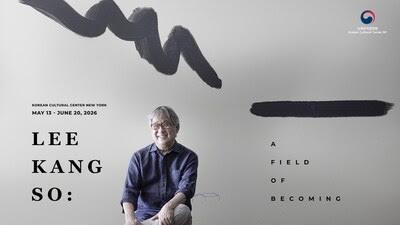
This spring, the Korean Cultural Center New York opens its doors to one of Korea’s most revered contemporary artists with Lee Kang So: A Field of Becoming, on view from May 13 through June 20, 2026. Nestled in the Gallery & Atrium spaces at KCCNY’s Manhattan home near Koreatown, the exhibition promises something rarer than spectacle. It offers stillness, motion, philosophy, memory, and material all tangled together like brushstrokes caught mid-breath.
And darling, New York art lovers who crave something beyond the algorithmic carousel of contemporary sameness may want to mark their calendars immediately.
The exhibition’s opening reception takes place Tuesday, May 12, from 6 to 8 PM, and it arrives carrying decades of artistic inquiry from a creator who has quietly become one of the most influential voices in Korean contemporary art.
Since the 1970s, Lee Kang So has wandered freely between painting, photography, sculpture, installation, printmaking, and performance art without ever allowing himself to be pinned down by a single form. That refusal feels especially refreshing in 2026, an era where everything and everyone seems desperate for labels. Lee’s work slips through categories like water through fingertips.
Instead of presenting art as a polished destination, Lee explores what happens in the act of becoming. His works often feel unfinished in the most beautiful sense of the word. They breathe. They shift. They settle into themselves the way cities do after rain.
The exhibition title, A Field of Becoming, captures this philosophy elegantly. Nothing is fixed. Meaning evolves through interaction, movement, accident, gravity, and time.
Earlier works from the 1970s revisit Lee’s experimental performance and installation period, where action and environment collided in ways that challenged traditional notions of authorship. Rather than dictating outcomes, Lee created situations where materials and moments could converse with one another organically. Art, in his world, is less command performance and more cosmic negotiation.
By the 1990s, that same curiosity migrated into sculpture and painting. Clay collapses. Metal bends. Ceramics settle. Gravity becomes collaborator instead of obstacle. Chance itself enters the studio wearing couture.
His paintings possess a similar rhythm. Fluid lines and repetitive gestures transform the canvas into something almost meditative. Animals and familiar forms appear and disappear without becoming rigid symbols. The images drift through the surface like fleeting thoughts during a late-night downtown cab ride across Manhattan.
What makes this exhibition especially poetic is Lee’s longstanding relationship with New York itself. During the 1980s and early 1990s, he immersed himself in the city’s experimental art world and participated in the Studio Artist Program at MoMA PS1. Those years helped shape the trajectory of his practice, and now, decades later, this exhibition feels less like a retrospective and more like a conversation resumed after a long intermission.
There is something deeply moving about artists returning to cities that once transformed them. New York has always devoured and remade creatives in equal measure. Lee Kang So, however, seems to have absorbed the city differently. Quietly. Patiently. Like sediment gathering into philosophy.
Visitors to the exhibition will experience works that span decades yet remain startlingly contemporary in their emotional and intellectual resonance. At a moment when the global art world often races toward louder, faster, shinier experiences, Lee’s work asks viewers to slow down and pay attention to process, materiality, and impermanence.
Frankly, that may be the most radical gesture of all.
The Korean Cultural Center New York continues to position itself as one of Manhattan’s most important cultural bridges, offering New Yorkers opportunities to engage with both Korea’s rich artistic heritage and its evolving contemporary landscape. Located at 122 East 32nd Street, the seven-story cultural center has become a vibrant meeting point for exhibitions, performances, film, and creative dialogue in the heart of the city.
For those seeking an art experience that lingers long after leaving the gallery walls, Lee Kang So: A Field of Becoming may become one of this season’s essential cultural pilgrimages.
And in a city obsessed with arrival, Lee reminds us there is extraordinary beauty in remaining beautifully unfinished.